Gardening Services in Barking

Gardening Services Barking provides practical garden care for homes and managed outdoor spaces in and around Barking, with a focus on keeping planting areas tidy, lawns managed and boundaries well maintained. Our work covers routine maintenance and one-off improvement tasks, so customers can choose support that suits the condition of the garden and the level of attention it needs. The aim is simple: reliable outside spaces that look cared for and remain usable through the seasons.
We handle a broad range of garden tasks, including garden maintenance, grass cutting, hedge trimming, garden clearance and selected landscaping work. Where a garden needs a more noticeable refresh, we can discuss planting changes, structure improvements and other upgrades that help the space feel organised again. If you are comparing options, you can start with the main service details and then request a quotation once you know the scope.
Some gardens only need recurring attention, while others have become overgrown or need a clearer layout after a period of neglect. We work in a straightforward way, combining the tasks that matter most first and then building a practical plan around access, season and the condition of the site. Clear priorities are helpful, especially when you want to balance appearance, usability and ongoing upkeep without unnecessary work.
Routine care for neat, manageable gardens
Regular maintenance is often the best way to keep a garden looking presentable without allowing jobs to stack up. Mowing, edging, light pruning, weeding and debris removal all contribute to a tidy result, but each garden needs a different rhythm. Some properties benefit from weekly or fortnightly attention during the growing season, while others only need a periodic visit to keep growth under control. The right plan depends on lawn type, planting density and how much upkeep the space can reasonably take.
For customers who want steady support, our lawn mowing and hedge care services can be combined with general tidying so that lawns, borders and paths all receive attention in one visit. This approach is useful where the garden needs consistency rather than a single overhaul. We can also shape a maintenance plan around simple priorities, such as keeping the grass at a manageable length, reducing encroachment from shrubs and making sure the main outdoor areas stay accessible.
Good routine work is not only about appearance. It also helps with safety, reduces the chance of invasive growth taking over and makes later improvements easier to carry out. A garden that is regularly maintained is less likely to need heavy clearance later, which can save time and make future work more predictable. For many properties, steady upkeep is the most cost-conscious way to preserve the space without turning each visit into a larger project.
Garden clearance and recovery work
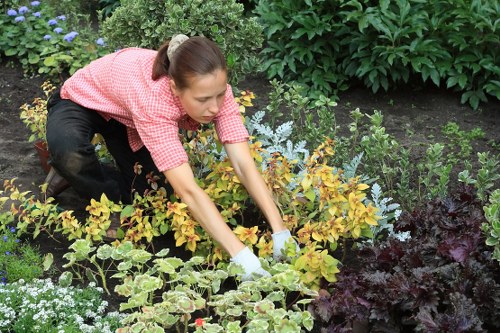
When a garden has become difficult to use, clearance work can bring it back to a workable condition. This may involve removing accumulated green waste, cutting back overgrowth, clearing dead material and making access paths visible again. The task is usually about restoring order before any finer detailing begins, especially where the space has been left for a long time or where previous planting has spread beyond its intended area. We can tackle clearance as a stand-alone job or as the first stage of wider garden improvement.
Our garden clearance service is suited to gardens that need decisive cutting back rather than cosmetic tidying. It may be relevant after a long gap in maintenance, before a sale or let, or when a garden needs to be prepared for fresh planting, repairs or redesign. In some cases, once the bulky material has been removed, it becomes easier to see what should stay, what should be replanted and what should be reshaped for better long-term use.
Where clearance is followed by improvement work, it helps to separate urgent tasks from optional extras. That way, the space can be made safe and manageable first, then refined in a second stage if needed. Practical clearance should leave the garden ready for sensible next steps rather than simply stripped back without a plan. If you are unsure how much work is needed, a clear description of the current condition is usually the most useful starting point.
Hedge trimming and boundary shaping
Hedges play a major role in the look and structure of a garden, but they also need regular attention to stay neat and balanced. Trimming can improve the outline of the planting, prevent a hedge from crowding paths or driveways and encourage a more controlled shape. Depending on the species and the season, the work may need to be light and frequent or more substantial when the growth has been left for longer than intended. The result should feel tidy without making the hedge look harshly cut back.
Our hedge trimming service works well alongside maintenance visits, particularly where boundary lines, front garden edges or privacy hedges need a consistent finish. If shrubs, climbers or other planted features are also pressing into the same space, trimming can be planned so that the overall shape remains balanced. We can also discuss how the hedge sits within the rest of the garden, which matters when the line of growth affects light, movement or access.
There is a useful difference between a hedge that simply needs reshaping and one that has grown into a larger access or visibility issue. A careful trim restores definition, while a more involved cutback may be needed where the hedge has become overly dense or uneven. Regular attention tends to keep future work simpler, because smaller corrections are easier to manage than repeated heavy reductions. Consistency often gives the cleanest finish over time.
Landscape gardening for better outdoor structure
Landscape gardening is the stage where a garden begins to feel more intentional. It may involve redesigning planting areas, improving the layout of paths and borders, or introducing features that make the space easier to use and more coherent visually. Rather than focusing only on upkeep, this type of work looks at how the garden functions as a whole. A well-planned layout can make routine care easier, create clearer movement through the space and give different parts of the garden a stronger purpose.
Our landscape gardening work can support customers who want to move beyond basic maintenance and make more lasting changes. Depending on the project, that may include soft landscaping, planting adjustments and a more structured approach to shaping the outdoor area. If the existing arrangement feels disconnected, we can discuss how to simplify the layout, improve the visual flow and align the planting with practical use of the garden. The emphasis is on workable improvements rather than decorative excess.
Some projects are best approached gradually. For example, a garden may benefit from one round of clearance, followed by structural changes and then planting. This phased approach keeps the job manageable and allows each stage to build on the one before it. It also makes it easier to decide where the biggest gains will come from, whether that is in appearance, circulation or long-term maintenance. In that sense, landscape gardening is often about designing for ease as much as for style.
Typical tasks within a landscaping project

The scope of a landscaping project can vary, but the work usually centres on improving how the garden is arranged and experienced. That may involve defining borders, refreshing tired planting, preparing ground for new features or adjusting the balance between hard and soft surfaces. In a smaller garden, the goal may be to make the space feel less crowded. In a larger one, it may be to connect different areas more clearly so that the garden feels like a whole rather than a series of unrelated sections.
Our landscaping service sits naturally alongside gardening tasks that support change, such as clearance, planting preparation and boundary shaping. Some customers want a more detailed refresh of a front garden, while others want the rear garden made more practical for day-to-day use. Where helpful, we can discuss which parts of the work should come first and which can follow later, so the project remains realistic and well paced.
Useful landscaping decisions often come down to three things: what already works, what causes difficulty and what the space should do once the changes are complete. A garden used mainly for sitting out may need different features from one that is better suited to planting or low-maintenance access. By keeping the discussion focused on purpose, materials and layout, the result is more likely to feel coherent instead of overcomplicated. Purpose-led planning usually leads to better long-term use.
Tree work for garden safety and light
Where trees become too large for a garden, selective tree work can help restore balance and improve access to light and space. The work may range from trimming back manageable growth to removing a tree that is no longer suitable for its position. In every case, the aim is to keep the outdoor area safe, controllable and in line with the available space. Tree work should be considered carefully because the effect on the wider garden can be significant.
Our tree lopping and removal service is relevant when branches are interfering with nearby planting, shading a lawn too heavily or making a boundary feel cramped. A precise approach matters, especially where trees sit close to fences, sheds, paths or neighbouring plots. Depending on the situation, a lighter reduction may be enough, while other cases need full removal before the area can be put to better use. We can discuss the most sensible option for the site conditions.
Tree work often sits alongside other gardening tasks rather than standing apart from them. Once the canopy or trunk issue has been dealt with, the surrounding beds, lawn edge or access route may need attention to complete the job properly. This is why tree work is usually most effective when considered as part of the wider garden rather than as an isolated intervention. It should improve the whole setting, not only the single tree in question.
About Barking
Barking is a district in east London within the London Borough of Barking and Dagenham, on the north bank of the River Roding close to its meeting point with the Thames estuary system. Historically it developed as a riverside settlement with strong ties to fishing, market activity and monastic landholding, and traces of that older pattern still sit alongside later layers of suburban growth and post-war rebuilding. Barking Abbey, founded in the seventh century, was one of the most important monastic houses in medieval England, and the abbey site remains a key reference point in the town’s history even though much of the original complex has gone. The parish church of St Margaret, with its long architectural history, and the nearby ruins and preserved structures help anchor the area’s heritage. The district is also shaped by transport and movement: Barking station, with rail and Underground links, has long made the town a practical interchange in east London. Nearby open spaces such as Barking Park and the riverside corridors give the area pockets of greenery within a heavily urban setting, while local streets show a mix of Victorian, interwar and newer housing. The result is a place with visible historical layers, river influence and a distinctly working urban character that has continued to evolve through regeneration and changing housing patterns.
Planning work, access and the right level of finish
Before any gardening work begins, it helps to think about access, the current state of the site and the finish you want to achieve. A clear description of the garden allows us to judge whether the job is mainly routine maintenance, a heavier clearance or a combination of several tasks. Where the space is difficult to reach, has limited parking nearby or includes delicate planting, those details can shape how the work is approached and how it is sequenced across the visit.
When you are preparing to enquire, a short written outline is often enough to start the conversation. If you can explain which areas matter most, whether the issue is lawn, hedge, overgrowth or a broader redesign, the discussion becomes more straightforward. For more structured work, it can also help to note whether you want a one-off improvement or recurring support. That distinction makes it easier to separate immediate tasks from later stages without overcomplicating the first step.
If you already know the main jobs that need attention, you can review the service options and choose the most relevant starting point. For pricing discussions, the most helpful quotations are usually based on the actual scope of work rather than general assumptions. When you are ready, speak to us about your garden and ask for a quotation that reflects the tasks you want done.
Help with the right maintenance approach

Not every garden needs the same level of intervention. Some properties mainly need regular mowing and light tidying, while others need a broader combination of cutting back, clearing and shaping. A sensible maintenance approach takes account of the season, the type of planting, the amount of lawn and how often the area is used. The more clearly those elements are understood, the easier it is to choose work that is proportionate rather than excessive.
For more detail on recurring care, our garden maintenance page explains the sort of tasks that can be combined into a practical routine. This may include weed control, border attention, lawn edging and general tidying. Where a site needs extra structure, the same maintenance plan can be aligned with hedge trimming or selective clearance so that the overall result remains coherent. The aim is to make the garden easier to look after from one visit to the next.
A useful rule is to separate what must be done now from what would simply be nice to have later. That keeps the work focused and helps you spend effort where it genuinely improves the space. Some jobs also make others easier: once a border is cleared, for example, the edge becomes easier to maintain; once a hedge is trimmed, the light and outline of the garden often improve. Small improvements can therefore have a bigger effect than they first appear to.
Working through a project from first cut to final tidy
Many garden jobs are best handled in stages, especially where a space has become untidy or needs a clearer layout. The first stage may be cutting back and clearing away waste, followed by shaping, trimming or planting changes, then a final tidy that brings the whole area together. This sequence helps the work stay manageable and avoids the problem of trying to fine-tune a garden before its basic structure is sorted out. It is a practical way to move from overgrown to usable.
Where a project includes more than one type of task, it can help to think about how each part relates to the next. A lawn may need cutting before edging becomes meaningful; a hedge may need trimming before the border beneath it can be finished neatly; an area scheduled for planting may need existing growth removed first. These connections matter because they determine the order of work and the overall quality of the result. Good sequencing is often what separates a rushed job from a coherent one.
That is why it is often worth asking for a quotation that reflects the whole job rather than only the most visible part of it. If the garden needs more than one kind of attention, a joined-up plan can be more efficient than separate visits arranged without context. For a straightforward way to move forward, use the contact page to ask about the work and ask for a quotation that matches the actual condition of the site.
Request a quotation for gardening services in Barking

Whether your garden needs regular upkeep, a one-off clear-out or a more involved landscaping change, the most useful next step is to identify the work that matters most. We can help with routine cutting and tidying, hedge care, garden clearance, tree-related work and improvement projects that give the space a better structure. By keeping the scope clear, it becomes easier to decide what should be included and how the job should be approached.
For customers who prefer a simple start, the best approach is to describe the main concerns in plain terms: overgrown areas, a tired lawn, a hedge that needs attention, or a garden that no longer feels easy to use. From there, the work can be matched to the most suitable service mix. If you are ready to take the next step, ask for a quotation and outline what you want done so the response reflects the real condition of the garden.
Request a quotation when you are ready, or use the service pages above to choose the type of gardening support that fits your needs best. If the garden needs immediate attention, start with the most pressing task and build from there. A clear plan usually makes the result more useful, more manageable and easier to maintain afterwards.